1. Formation of the Earth:
* Accretion: The Earth formed from a swirling cloud of dust and gas. As these particles collided and stuck together, the increasing mass and gravitational pull attracted more material. This process generated significant heat.
* Differentiation: As the Earth grew larger, the internal temperature rose due to the continuous collisions, gravitational compression, and radioactive decay of elements within the planet. This intense heat caused the materials to melt and separate based on density.
* Density Stratification: Denser materials like iron and nickel sank towards the center, forming the core. Lighter elements like silicon and oxygen rose to the surface, forming the crust and mantle.
2. Layers Formation:
* Core: The Earth's core is the densest layer, composed primarily of iron and nickel. It's divided into a solid inner core and a liquid outer core. The immense pressure at the inner core keeps it solid despite the high temperature.
* Mantle: The thickest layer surrounding the core, the mantle is primarily composed of silicate minerals. The mantle is mostly solid, but it behaves like a very viscous fluid over long periods, allowing for plate tectonics.
* Crust: The Earth's outermost and thinnest layer, the crust is divided into oceanic crust (thin and dense) and continental crust (thicker and less dense). The crust is composed of various rocks and minerals, including granite and basalt.
3. Ongoing Processes:
* Plate Tectonics: The Earth's crust is broken into large plates that constantly move and interact, driven by convection currents in the mantle. This movement causes earthquakes, volcanic eruptions, and mountain formation.
* Convection Currents: Heat from the Earth's core creates convection currents within the mantle, which cause the plates to move.
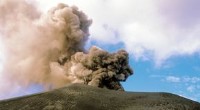
* Volcanic Activity: Magma, molten rock from the mantle, rises to the surface through volcanic eruptions, bringing new material to the crust and contributing to its evolution.
In conclusion, the different layers of the Earth formed due to the interplay of gravity, heat, and the differentiation of materials during Earth's formation. These processes continue to shape the planet's surface through plate tectonics, volcanic activity, and other geological phenomena.