Intrusive Igneous Rocks:
* Formation: These rocks form when magma (molten rock) cools and solidifies beneath the Earth's surface.
* Cooling Rate: They cool slowly due to the insulating effect of the surrounding rock. This slow cooling allows for the formation of large crystals (visible to the naked eye).
* Examples: Granite, gabbro, diorite
Extrusive Igneous Rocks:
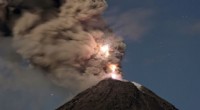
* Formation: These rocks form when lava (magma that has erupted onto the Earth's surface) cools and solidifies.
* Cooling Rate: They cool rapidly due to exposure to the atmosphere and water. This fast cooling leads to the formation of small crystals (microscopic or barely visible).
* Examples: Basalt, rhyolite, obsidian (which cools so quickly that crystals don't form)
Here's a table summarizing the key differences:
| Feature | Intrusive | Extrusive |
|---|---|---|
| Formation | Magma cools underground | Lava cools on the surface |
| Cooling Rate | Slow | Fast |
| Crystal Size | Large | Small |
| Texture | Coarse-grained | Fine-grained |
| Examples | Granite, gabbro, diorite | Basalt, rhyolite, obsidian |
In addition to the above, here are some other key distinctions:
* Structure: Intrusive rocks often exhibit features like dikes (vertical intrusions) and sills (horizontal intrusions). Extrusive rocks often form in layers known as flows.
* Composition: Both intrusive and extrusive rocks can have similar mineral compositions, but their textures are significantly different due to the different cooling rates.
Understanding the differences between intrusive and extrusive igneous rocks is fundamental to understanding the processes that shape our planet and the formation of various rock types.