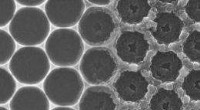
1. Starting Point: Limestone
* Limestone is a sedimentary rock primarily composed of calcium carbonate (CaCO3).
* It forms from the accumulation and cementation of the shells, skeletons, and other remains of marine organisms.
2. The Metamorphic Process
* Heat and Pressure: Limestone is buried deep beneath the Earth's surface, where it experiences intense heat and pressure.
* Recrystallization: The heat and pressure cause the calcium carbonate crystals in the limestone to rearrange and grow larger. This process is called recrystallization.
* Chemical Changes: Impurities in the limestone may react with the calcium carbonate, introducing new minerals and altering the chemical composition.
3. The Result: Marble
* New Texture: The recrystallization process gives marble a characteristic, often interlocking crystalline structure.
* Variety of Colors: The impurities present during the metamorphic process often give marble its unique colors and patterns. For example, iron oxide can create red or brown veins, while silica can create white or gray veins.
* Hardness and Durability: Marble is a much harder and more durable rock than limestone due to the larger and tightly interlocked crystals.
Summary:
Limestone turns into marble through a metamorphic process where heat, pressure, and chemical reactions cause the existing calcium carbonate crystals to recrystallize, grow larger, and become more tightly interlocked. This process results in a hard, durable rock with a characteristic crystalline structure and a wide range of colors and patterns.