To understand North's location on Earth, we need to consider:
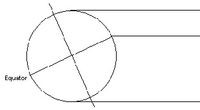
* Geographic North Pole: This is the northernmost point on Earth, where all lines of longitude converge. It's located at 90 degrees North latitude.
* Magnetic North Pole: This is the point where Earth's magnetic field lines point vertically downwards. It's located in the Arctic Ocean and constantly moves.
* True North: This is the direction towards the Geographic North Pole, which is used for navigation.
So, while "North" doesn't have a specific location on a map, it's a direction that points towards:
* Geographic North Pole for true North.
* Magnetic North Pole for magnetic North, which is used by compasses.
Here's a breakdown of how North affects our understanding of Earth:
* Latitude: Lines of latitude run east to west, and the North Pole is at 90 degrees North latitude. The higher the latitude, the closer you are to the North Pole.
* Longitude: Lines of longitude run north to south, and they all converge at the North Pole.
* Compass: A compass points towards magnetic North, which can be slightly different from true North.
* Navigation: Knowing true North is crucial for accurate navigation, especially for long distances.
Therefore, "North" isn't a single location, but rather a direction that helps us understand the geography and magnetic field of our planet.