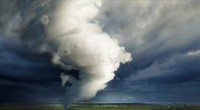
Early Earth:
* No continents as we know them: The Earth's surface was largely molten, with only small, unstable landmasses emerging.
* A harsh environment: The atmosphere was thin and toxic, primarily composed of gases like methane and ammonia. There was no oxygen, making life as we know it impossible.
* Constant bombardment: The Earth was frequently hit by asteroids and comets, leaving scars across its surface.
The Rise of Life:
* First life emerges: While exact details remain uncertain, the first life forms – likely simple single-celled organisms – arose in the oceans around 3.8 billion years ago.
* Early oceans: Oceans were hot and acidic, teeming with microbes but lacking complex organisms.
* Photosynthesis emerges: Around 3.5 billion years ago, life began to exploit sunlight for energy through photosynthesis. This was a crucial step as it slowly released oxygen into the atmosphere.
The Late Precambrian:
* Continents begin to form: Large landmasses started to coalesce, eventually forming the supercontinent Rodinia.
* Oxygen levels rise: Photosynthesis continued, gradually enriching the atmosphere with oxygen, paving the way for more complex life forms. This oxygenation had a dramatic impact, leading to the "Great Oxidation Event," which saw the extinction of many anaerobic organisms.
* First multicellular life appears: By the end of the Precambrian, the first multicellular organisms, including some early animals, had evolved.
A World of Extremes:
* Volcanic activity: The Precambrian saw intense volcanic activity, shaping the Earth's surface and releasing gases into the atmosphere.
* Glacial periods: There were several periods of intense glaciation, with vast ice sheets covering large parts of the Earth.
In summary, the Precambrian Earth was a chaotic and dynamic place, vastly different from the world we know today. It was a period of dramatic change, with the emergence of life, the formation of continents, and the oxygenation of the atmosphere. It laid the groundwork for the incredible diversity of life that evolved in the subsequent eras.