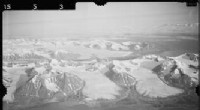
* Plucking: As the glacier moves, it freezes to the bedrock. When it moves again, it pulls away chunks of rock, leaving a jagged, uneven surface. This process is known as plucking.
* Abrasion: Embedded rocks and sediment within the ice act like sandpaper, grinding against the bedrock as the glacier moves. This process is called abrasion.
The combined effects of plucking and abrasion create a variety of features:
* Striations: These are long, parallel scratches on the bedrock, created by rocks embedded in the ice. They indicate the direction of the glacier's movement.
* U-shaped valleys: Glaciers carve out valleys with a distinctive U-shape, as opposed to the V-shaped valleys created by rivers.
* Cirques: These are bowl-shaped depressions at the head of a glacier. They form as the glacier erodes the surrounding rock.
* Aretes: These are sharp, narrow ridges that separate cirques.
* Horns: These are pointed peaks formed where three or more cirques meet.
Smoothing: As the glacier moves, it gradually wears down the high points of the landscape and fills in the low points, creating a smoother surface. The overall effect is a landscape that is rounded and less jagged than the original terrain.
Overall, the combination of plucking and abrasion by continental glaciers results in a distinctive landscape characterized by smoothed surfaces, U-shaped valleys, and other glacial features.