1. Magma Formation:
* Deep within the Earth's mantle, intense heat melts rock, creating molten material called magma.
* This magma is less dense than the surrounding solid rock, causing it to rise towards the surface.
2. Plate Tectonics and Magma Movement:
* The Earth's crust is broken into massive plates that constantly move and interact.
* Convergent plate boundaries: When two plates collide, one may slide beneath the other (subduction). This process forces water and other volatile compounds down into the mantle, lowering the melting point of rock and creating magma.
* Divergent plate boundaries: Where plates pull apart, magma rises up to fill the gap. This is common at mid-ocean ridges.
* Hotspots: In some places, plumes of hot magma rise from deep within the mantle, creating volcanic activity regardless of plate boundaries.
3. Eruptions and Mountain Building:
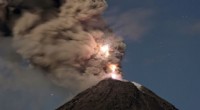
* When magma reaches the surface, it erupts as lava.
* The repeated eruptions over time build up layers of lava, ash, and other volcanic materials, creating a cone-shaped structure - the volcanic mountain.
* The shape of the mountain depends on the type of eruption (explosive or effusive) and the composition of the magma.
Types of Volcanic Mountains:
* Shield volcanoes: Broad, gently sloping volcanoes formed by fluid, basaltic lava flows.
* Cinder cones: Small, steep-sided volcanoes formed by eruptions of pyroclastic material (ash, cinders, and bombs).
* Composite volcanoes (stratovolcanoes): Large, cone-shaped volcanoes built up from alternating layers of lava flows and pyroclastic materials. They tend to have explosive eruptions.
Examples of Volcanic Mountains:
* Mauna Kea (Hawaii): Shield volcano
* Mount Fuji (Japan): Composite volcano
* Paricutin (Mexico): Cinder cone
Interesting Fact:
Volcanic mountains are not just impressive formations; they also play a crucial role in shaping our planet's landscapes and ecosystems. Volcanic soils are often very fertile, supporting a wide variety of plant and animal life.