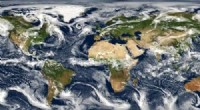
Continental drift describes the slow, continuous movement of Earth's continents over millions of years. This movement is driven by tectonic plates, massive slabs of Earth's crust that "float" on the semi-molten mantle below.
Here's a breakdown:
* The Puzzle: Imagine Earth's continents as giant puzzle pieces that were once fit together. Continental drift suggests that these pieces were not always in their current positions.
* The Movement: The continents are carried by the tectonic plates, which are constantly moving and interacting with each other. This movement can be compared to a conveyor belt, with the plates colliding, separating, and sliding past each other.
* The Evidence: The idea of continental drift was initially controversial, but compelling evidence has emerged over time, including:
* Matching coastlines: The shapes of continents, particularly the west coast of Africa and the east coast of South America, appear to fit together like a jigsaw puzzle.
* Fossil evidence: Identical fossils of ancient plants and animals have been found on continents now separated by vast oceans, suggesting they were once connected.
* Geological similarities: Similar rock formations and mountain ranges found on different continents support the idea that they were once part of a larger landmass.
* Magnetic stripes on the ocean floor: The patterns of magnetic stripes on the ocean floor provide evidence of seafloor spreading, a process where new oceanic crust is created at mid-ocean ridges and pushed away from the ridge as the continents drift apart.
Implications:
* Mountain formation: The collision of tectonic plates can create mountains, such as the Himalayas, which formed when the Indian subcontinent collided with Asia.
* Earthquakes and volcanoes: The movement of tectonic plates can also cause earthquakes and volcanic eruptions, as the plates interact with each other.
* Climate change: Continental drift has played a significant role in shaping Earth's climate over time, as continents have moved into different latitudes and ocean currents have changed.
Conclusion:
Continental drift is a fundamental concept in geology that helps us understand the dynamic nature of Earth. It is a powerful force that has shaped our planet's continents, oceans, mountains, and climate over millions of years.