Natural Forces:
* Glaciers: Glaciers are massive sheets of ice that move slowly across the land. They can carry enormous boulders, grinding and shaping the landscape as they move. This is known as glacial transport.
* Rivers: Strong currents in rivers can move large rocks, especially during floods. This is known as fluvial transport.
* Waves: Waves crashing against coastlines can erode cliffs and carry large rocks into the ocean, transporting them along the shore. This is known as coastal transport.
* Wind: While wind is less powerful than other forces, it can still move smaller rocks, especially in arid regions with strong winds. This is known as aeolian transport.
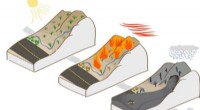
* Gravity: Gravity plays a role in the transport of large rocks by causing them to roll downhill, especially during landslides or rockfalls.
Human Forces:
* Construction equipment: Excavators, bulldozers, and other heavy machinery are used to move large rocks for construction projects.
* Trucks and trains: Large rocks are transported by trucks or trains to construction sites or other destinations.
* Ships: Large rocks can be transported by ships, especially for use in coastal protection or breakwaters.
The specific force responsible for transporting a large rock depends on its size, shape, and the surrounding environment.