* Gravity: Earth's gravity pulls all matter towards its center, creating a spherical shape. However, the Earth is also rotating, which introduces centrifugal force.
* Centrifugal Force: This force pushes outward, acting against gravity. It's strongest at the equator, where the Earth's rotation is fastest. This outward push causes the equator to bulge and the poles to flatten slightly.
There are no credible scientific theories that claim the Earth is anything other than an oblate spheroid. The evidence for this shape is overwhelming and comes from various sources:
* Satellite Observations: Satellites constantly orbit the Earth and provide precise measurements of its shape.
* Observations of Ships Disappearing Over the Horizon: Ships disappear hull first, not all at once, which is consistent with a curved Earth.
* Lunar Eclipses: During a lunar eclipse, the Earth's shadow on the Moon is always round, further confirming its spherical shape.
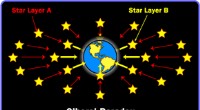
* Different Star Constellations at Different Locations: People at different latitudes see different constellations because of Earth's curvature.
* Pictures From Space: Images from space clearly show a spherical Earth.
It's important to note that some flat-earth theories exist, but these are not supported by any scientific evidence and are easily debunked by the above observations.