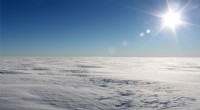
* The Earth's Curvature: The Earth is a sphere, so the ground curves away from you as you look out. This curvature limits how far you can see.
* Atmospheric Conditions: The air is not perfectly transparent. Dust, water vapor, and other particles scatter and absorb light, making things appear hazy or obscured at a distance.
How far you can see depends on a few factors:
* Your Height: The higher you are, the farther you can see. This is because you are looking over more of the Earth's curve.
* The Height of the Object: The higher the object you are looking at, the farther away it can be and still be visible.
* Atmospheric Conditions: Clear, dry air allows you to see farther than hazy or humid air.
Here's a rough estimate:
* Average human height: About 6 feet. On average, you can see about 3 miles on a perfectly clear day.
* On top of a mountain: If you're at a high altitude (like on a mountaintop), you can see much farther.
To calculate the exact distance, you can use a formula:
* Distance = 3.57 * √(height in feet) + 0.5
This formula gives you a theoretical distance based on your height and assuming a perfectly clear atmosphere. In reality, you'll likely see farther or less depending on the specific conditions.
So, while you can't see infinitely far on flat land, you can still see pretty far with the right conditions!