Volcanic Mountains (Pacific Ring of Fire):
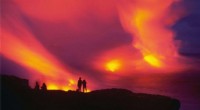
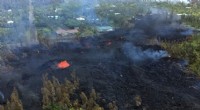
* Formation: Formed by the eruption of magma from the Earth's mantle. The Pacific Ring of Fire is a zone of intense volcanic activity due to subduction zones, where one tectonic plate slides beneath another, causing magma to rise.
* Characteristics:
* Typically cone-shaped with a crater at the summit.
* Composed of cooled lava, volcanic ash, and rock fragments.
* Often have steep slopes and irregular terrain.
* Can be active (erupting) or dormant (not currently erupting).
* Examples: Mount Fuji (Japan), Mount Vesuvius (Italy), Mount St. Helens (USA).
Fold Mountains:
* Formation: Formed when two tectonic plates collide, causing the Earth's crust to buckle and fold.
* Characteristics:
* Often have long, continuous ranges with peaks and valleys.
* Composed of sedimentary rocks that have been deformed by pressure.
* Can have sharp, jagged peaks or rounded, rolling hills.
* Typically have complex geological structures.
* Examples: The Himalayas (Asia), the Alps (Europe), the Andes (South America).
Key Differences:
* Origin: Volcanic mountains form from volcanic activity, while fold mountains form from tectonic plate collisions.
* Composition: Volcanic mountains are composed of igneous rock (cooled magma), while fold mountains are primarily composed of sedimentary rock.
* Shape: Volcanic mountains are typically cone-shaped, while fold mountains can have a variety of shapes, depending on the folding process.
* Activity: Volcanic mountains can be active, dormant, or extinct, while fold mountains are generally not active.
In summary, the mountains in the Pacific Ring of Fire are distinct from fold mountains due to their different formation processes, compositions, shapes, and activities. While fold mountains are the result of tectonic plate collisions, volcanic mountains are formed by magma eruptions, creating unique and often dramatic landscapes.