Here's a breakdown of what Geography encompasses:
* Physical Geography: This branch focuses on the Earth's natural systems, including:
* Landforms: Mountains, valleys, plateaus, etc.
* Climate: Temperature, precipitation, weather patterns.
* Water: Oceans, rivers, lakes, groundwater.
* Vegetation: Forests, grasslands, deserts.
* Soil: Composition, formation, and properties.
* Human Geography: This branch studies the interactions between humans and their environment, including:
* Population: Distribution, density, growth, and migration.
* Culture: Languages, religions, traditions, and customs.
* Economics: Trade, industry, agriculture, and development.
* Politics: Governments, borders, and international relations.
* Urban Studies: Cities, urban planning, and infrastructure.
* Geographic Information Systems (GIS): This involves the use of computer systems to analyze and visualize geographic data. It's a powerful tool for understanding spatial patterns and relationships.
Geography is a diverse and complex field that utilizes various methods, including:
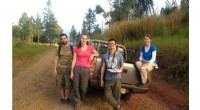
* Fieldwork: Observing and collecting data in the real world.
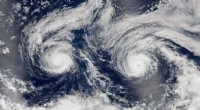
* Remote sensing: Using satellite imagery and aerial photography to study the Earth.
* Cartography: Creating and using maps to represent geographic information.
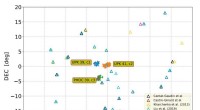
* Quantitative analysis: Using statistics and mathematical models to analyze geographic data.
Ultimately, Geography aims to understand the Earth's interconnected systems and how humans interact with them. It is a crucial discipline for addressing important issues like climate change, sustainable development, and resource management.