Here's why:
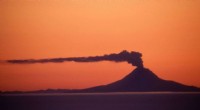
* Steep sides: Stratovolcanoes are known for their cone-shaped, steep slopes.
* Alternating layers of lava and tephra: The "lava" refers to solidified lava flows, while "tephra" includes volcanic ash, pumice, and other fragmented material ejected during explosive eruptions. These layers build up over time, creating the characteristic layered structure of stratovolcanoes.
Other features that can be associated with stratovolcanoes:
* Explosive eruptions: These volcanoes are often associated with violent, explosive eruptions due to the thick, viscous nature of their magma.
* Andesitic magma: The magma in stratovolcanoes is typically andesitic, which is intermediate in composition between basaltic (mafic) and rhyolitic (felsic) magma.
* Located at convergent plate boundaries: Stratovolcanoes are commonly found at subduction zones, where one tectonic plate slides beneath another.
Examples of famous stratovolcanoes:
* Mount Fuji (Japan)
* Mount Vesuvius (Italy)
* Mount St. Helens (USA)
* Mount Kilimanjaro (Tanzania)