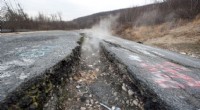
1. Types of Mass Wasting:
* Creep: Slow, gradual movement of soil and rock, often unnoticed until its effects become apparent.
* Slump: A downward sliding of rock or soil along a curved surface.
* Rockslide: A rapid, downslope movement of rock fragments.
* Debris Flow: A fast-moving mixture of water, mud, rock, and other debris.
* Earthflow: A slow, downslope movement of saturated soil.
* Mudflow: A fast-moving mixture of water and fine sediment, often triggered by heavy rainfall.
2. Factors Influencing Mass Wasting:
* Gravity: The primary driving force.
* Slope Angle: Steeper slopes are more prone to mass wasting.
* Water: Excess water saturates the soil, reducing its strength and increasing its weight.
* Vegetation: Roots help stabilize slopes, while deforestation increases the risk.
* Rock Structure: Weak or fractured rock layers are more susceptible to failure.
* Earthquakes: Seismic activity can trigger landslides and other mass wasting events.
3. The Process:
Mass wasting begins when weathered rock and soil become unstable due to one or more of these factors. Gravity then pulls the material downslope, causing it to move in a variety of ways. The speed and type of movement depend on the factors mentioned above.
4. Impacts of Mass Wasting:
* Landslides: Can cause significant damage to property and infrastructure.
* Erosion: Removes topsoil, reducing land fertility.
* Flooding: Debris flows and mudflows can block waterways and cause flooding.
* Habitat Loss: Mass wasting can destroy natural habitats, impacting biodiversity.
5. Mitigation:
* Slope Stabilization: Techniques like retaining walls, drainage systems, and vegetation planting can help stabilize slopes.
* Land-Use Planning: Avoiding development on unstable slopes can prevent mass wasting events.
* Early Warning Systems: Monitoring systems can detect potential hazards and warn people in advance.
Understanding mass wasting is crucial for protecting people and property from its destructive effects.