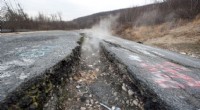
Earth's crust is the outermost solid layer of our planet, like a thin skin on an apple. It's made up of various types of rocks, ranging from hard granite to soft clay, and can be divided into two main parts:
* Continental crust: This is the thicker, less dense crust that forms the continents and is primarily composed of granitic rocks.
* Oceanic crust: This is the thinner, denser crust that forms the ocean floor and is primarily composed of basalt.
Landforms are the features that shape the Earth's surface. They are created by a combination of forces, including:
1. Tectonic Activity: The movement of the Earth's tectonic plates is the primary force behind the formation of many landforms. This movement creates mountains, volcanoes, valleys, and trenches.
* Mountain Ranges: Formed when tectonic plates collide and push against each other.
* Volcanoes: Formed when magma from the Earth's mantle erupts through the crust.
* Rift Valleys: Formed when tectonic plates pull apart and create valleys.
2. Erosion: The gradual wearing away of rock and soil by wind, water, and ice is called erosion. This process shapes landforms and creates features like canyons, valleys, and beaches.
* Canyons: Formed by rivers eroding through rock over millions of years.
* Valleys: Formed by rivers, glaciers, or tectonic activity.
* Beaches: Formed by waves eroding the coastline.
3. Deposition: The process of dropping sediment carried by wind, water, or ice is called deposition. This process builds up landforms such as sand dunes, deltas, and alluvial fans.
* Sand Dunes: Formed by wind depositing sand.
* Deltas: Formed by rivers depositing sediment at their mouths.
* Alluvial Fans: Formed by rivers depositing sediment at the base of mountains.
4. Weathering: The breakdown of rocks and minerals into smaller pieces by physical and chemical processes is called weathering. This process helps shape landforms by preparing them for erosion.
* Physical Weathering: The breakdown of rock by forces like freezing and thawing, abrasion, and root wedging.
* Chemical Weathering: The breakdown of rock by chemical reactions like oxidation and acid rain.
In summary:
* Earth's crust is the outermost layer of the planet, composed of continental and oceanic crust.
* Landforms are the diverse features that shape the Earth's surface.
* Tectonic activity, erosion, deposition, and weathering are the main forces that create and modify landforms.
Understanding the Earth's crust and landforms helps us appreciate the complex geological processes that have shaped our planet over billions of years.