Landmass:
* Vast Continents: The Earth's surface would be dominated by a single, massive supercontinent, with only small, isolated islands scattered across its vast expanse. This would have a huge impact on climate, weather patterns, and ecosystems.
* Lack of Coastal Zones: The familiar coastal areas, with their unique ecosystems and diverse life forms, would largely disappear. This would have a huge impact on the oceans, too, as they would have very little interaction with the land.
Climate:
* Extreme Temperatures: The lack of oceans, which act as massive heat reservoirs, would lead to much more extreme temperature swings between day and night, as well as between seasons. Interior regions of the supercontinent would be incredibly hot during the day and freezing at night.
* Less Moisture: With less water available for evaporation, the atmosphere would be incredibly dry, leading to severe droughts and dust storms.
* Lack of Cloud Cover: Without the oceans to provide moisture for clouds, the sky would often be clear, leading to intense solar radiation.
* Wind Patterns: The massive supercontinent would lead to predictable wind patterns, likely creating giant deserts and very few areas of significant rainfall.
Life:
* Challenges for Life: This altered planet would be extremely challenging for many forms of life. Plants would need to be incredibly drought-resistant. Animals would need to adapt to the extreme temperatures and lack of water. Many existing species would struggle to survive.
* New Adaptations: Over time, some species might evolve unique adaptations to thrive in this extreme environment. However, the diversity of life on Earth would likely be significantly reduced.
Other Impacts:
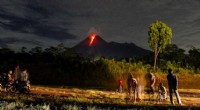
* Volcanic Activity: The vast amount of exposed crust would increase volcanic activity, leading to more frequent eruptions and potential catastrophic events.
* Seismic Activity: The shift in tectonic plates would likely lead to more earthquakes and other seismic events.
In short, a world with most of its crust above sea level would be a desolate and hostile place, very different from the Earth we know. While it's a fascinating thought experiment, it's unlikely to be a scenario that would support the complex and diverse life forms we see on Earth today.