Hawaii
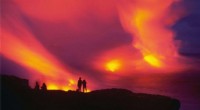
* The Hawaiian Islands are the most famous example of islands formed by a mantle plume.
* The plume is thought to be located deep within the Earth's mantle and has been continuously erupting for millions of years, creating a chain of volcanic islands.
* The islands get older as you move northwest, showing the movement of the Pacific Plate over the stationary plume.
Iceland
* Iceland is another prime example of an island formed by a mantle plume.
* The plume lies beneath the Mid-Atlantic Ridge, which is a divergent plate boundary where the North American and Eurasian plates are pulling apart.
* This combination of a plume and a spreading ridge results in a massive amount of volcanic activity, creating Iceland's unique landscape.
Galapagos Islands
* The Galapagos Islands are formed by a hotspot, which is a localized area of volcanic activity caused by a mantle plume.
* The plume is located under the Nazca Plate, and as the plate moves, it creates a chain of islands.
* The islands are famous for their unique wildlife, which has evolved in isolation.
Easter Island
* Easter Island is a volcanic island located in the southeastern Pacific Ocean.
* The island is thought to have formed from a hotspot related to the mantle plume that created the Hawaiian Islands.
* While the exact origin is debated, it's believed to be linked to this larger plume.
Other Examples
* Emperor Seamounts: A chain of extinct volcanoes northwest of the Hawaiian Islands, also formed by the Hawaiian mantle plume.
* Azores Islands: Located in the North Atlantic Ocean, formed by a mantle plume.
* Kerguelen Plateau: A large plateau in the southern Indian Ocean, formed by a mantle plume.
It's important to note that the formation of islands by mantle plumes is a complex process and the exact mechanisms are still being researched. However, the examples listed above demonstrate the significant role that mantle plumes play in shaping Earth's surface.