Mountain Building (Orogenesis):
* Collision Zones: When two continental plates collide, their immense pressure causes the land to buckle, fold, and uplift, creating mountain ranges. The Himalayas, for example, formed from the collision of the Indian and Eurasian plates.
* Subduction Zones: When an oceanic plate collides with a continental plate, the denser oceanic plate is forced beneath the continental plate (subduction). This process creates a trench along the boundary and also causes the continental plate to uplift, forming mountain ranges. The Andes Mountains in South America are an example of this.
Volcanoes:
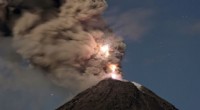
* Subduction Zones: As the oceanic plate descends, it releases water and other fluids. These fluids melt the overlying mantle, generating magma. The magma rises and erupts through the surface, creating volcanoes. The Ring of Fire, which circles the Pacific Ocean, is a prime example of volcanic activity associated with subduction zones.
* Continental-Continental Collisions: Volcanic activity is less common in continental-continental collisions. While magmatism can occur during the early stages of collision, the process primarily leads to mountain building rather than extensive volcanism.
Relationship between Mountain Building and Volcanoes:
* Interplay: The processes of mountain building and volcanism are often interconnected. Subduction zones, which lead to both mountain formation and volcanic activity, highlight this connection.
* Timing: Volcanism typically precedes mountain building in subduction zones. The initial stages involve melting of the mantle and volcanic eruptions. As the collision continues, the pressure builds, leading to the uplift and folding of the crust, creating mountains.
* Location: Mountain ranges and volcanoes are frequently found near convergent boundaries, reflecting their shared origins in plate interactions.
Key Concepts:
* Plate Convergence: The key driver of both mountain building and volcanism at convergent boundaries is the interaction of tectonic plates.
* Pressure and Uplift: Collisions between plates create immense pressure, leading to the buckling, folding, and uplift of the Earth's crust, forming mountains.
* Magmatism: The subduction process generates magma, which rises to the surface and erupts as volcanoes.
In summary, the interplay of plate tectonics at convergent boundaries results in the formation of mountains and volcanoes, highlighting the interconnectedness of these geological processes.