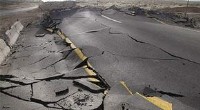
Immediate Changes:
* Fault Movement: The most obvious change is the rupture and displacement of the earth's crust along the fault line. This movement can be horizontal (strike-slip) or vertical (dip-slip).
* Ground Shaking: The release of energy from the earthquake causes violent shaking of the ground, which can result in:
* Landslides: Slopes destabilized by the tremors can collapse.
* Liquefaction: Loose, saturated sediments can behave like a fluid, leading to ground failure.
* Ground Settlement: The shaking can cause soil compaction, leading to ground sinking.
* Tsunami Formation: If the earthquake occurs underwater, especially near a subduction zone, the sudden displacement of the ocean floor can generate massive waves called tsunamis.
Long-Term Changes:
* Crustal Deformation: The earthquake can permanently deform the earth's crust, altering the shape and elevation of the land. This is most noticeable in areas near the epicenter.
* Changes in Drainage Patterns: Fault movement can alter river courses and drainage patterns.
* Seismic Aftershocks: A series of smaller earthquakes called aftershocks can occur in the days, weeks, or even months following the main earthquake. These aftershocks can further destabilize the ground and cause additional damage.
* Volcanic Activity: In some cases, earthquakes can trigger volcanic eruptions, especially if they occur near active volcanoes.
Geological Evidence:
* Fault Scarps: The displacement of the crust can create visible cliffs called fault scarps.
* Offset Features: Natural and human-made features, such as roads, fences, and rivers, can be offset by the earthquake.
* Folding and Fracturing: The intense stress caused by the earthquake can lead to folding and fracturing of rocks.
It's important to remember:
* The severity of these changes depends on the earthquake's magnitude, the type of fault, and the local geology.
* These changes can have significant impacts on human infrastructure, ecosystems, and the environment.
Earthquakes are a natural phenomenon that shape the earth's surface. Understanding the effects of earthquakes is crucial for preparing for and mitigating their impact.