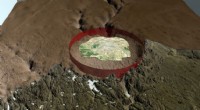
Rocks formed from magma:
* Intrusive igneous rocks: Magma cools and solidifies *inside* the Earth's crust. This slow cooling allows for larger crystals to form, resulting in rocks with a coarse-grained texture. Examples include granite, gabbro, and diorite.
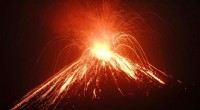
Rocks formed from lava:
* Extrusive igneous rocks: Lava erupts onto the Earth's surface and cools quickly. This rapid cooling leads to the formation of smaller crystals, resulting in rocks with a fine-grained texture. Examples include basalt, rhyolite, and andesite.
Here's a table summarizing the differences:
| Feature | Intrusive Igneous Rocks (Magma) | Extrusive Igneous Rocks (Lava) |
|---|---|---|
| Cooling Process | Slow cooling underground | Rapid cooling above ground |
| Crystal Size | Larger crystals | Smaller crystals |
| Texture | Coarse-grained | Fine-grained |
| Examples | Granite, gabbro, diorite | Basalt, rhyolite, andesite |
Other differences:
* Chemical composition: While both types are formed from molten rock, they can have slightly different chemical compositions due to the different pressures and environments in which they cool.
* Appearance: Intrusive igneous rocks tend to have a more uniform appearance, while extrusive rocks can have a more varied appearance depending on the speed of cooling and the presence of gas bubbles.
It's worth noting that some igneous rocks can have a mixed texture, with both large and small crystals. This is called porphyritic texture, and it occurs when the magma cools in stages.