1. Earthquakes: Stress builds up within the Earth's crust and eventually exceeds the strength of the rocks. This causes a sudden release of energy, resulting in vibrations that we feel as earthquakes.
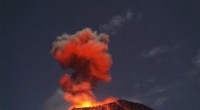
2. Volcanoes: Stress can cause the Earth's crust to thin and fracture, allowing magma to rise from the mantle and erupt at the surface, forming volcanoes.
3. Mountain Ranges: Stress can cause tectonic plates to collide, pushing up the Earth's crust and forming mountain ranges.
4. Faults: Stress can cause the Earth's crust to fracture, creating faults. These fractures can be large and extend for hundreds of kilometers.
5. Fold Belts: Stress can cause rock layers to bend and fold, creating fold belts. These folds can be large and complex, forming hills and valleys.
6. Rifts: Stress can cause the Earth's crust to pull apart, creating rifts. These rifts can be narrow and deep, and can eventually widen to form new ocean basins.
7. Plate Tectonics: The movement of tectonic plates is driven by the stress within the Earth's crust. This movement causes earthquakes, volcanoes, and the formation of mountain ranges.
8. Isostasy: Stress can also cause changes in the Earth's crust due to the principle of isostasy. This principle states that the Earth's crust floats on the mantle. If the crust is thickened by the addition of material, it will rise. If the crust is thinned, it will sink.
In summary, stress within the Earth's crust is a fundamental force that drives many of the geological processes that shape our planet. It leads to a wide range of geological phenomena, including earthquakes, volcanoes, mountain ranges, and plate tectonics.