1. Fault-Block Mountains:
* Definition: These mountains form when blocks of Earth's crust are uplifted along normal faults. Normal faults occur when the hanging wall (the block above the fault) moves down relative to the footwall (the block below the fault).
* Process: Tensional forces in the Earth's crust cause the crust to stretch and break. The blocks drop down along the faults, creating valleys, and the uplifted blocks form mountains.
* Examples: The Sierra Nevada Mountains in California, the Grand Tetons in Wyoming, and the Harz Mountains in Germany.
2. Fault-Fold Mountains:
* Definition: These mountains form when layers of rock are folded and uplifted due to compressional forces, often along thrust faults.
* Process: Compressional forces push rock layers together, causing them to fold and buckle. Thrust faults are often involved, where the hanging wall is pushed up and over the footwall.
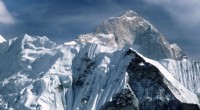
* Examples: The Appalachian Mountains in the eastern United States, the Himalayas in Asia, and the Alps in Europe.
3. Mountains Formed Along Fault Zones:
* Definition: Faults can act as zones of weakness in the Earth's crust, which can lead to volcanic activity and uplift.
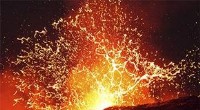
* Process: Magma can rise to the surface along fault zones, leading to volcanic eruptions. The accumulation of lava and ash can build up over time, forming mountains. Also, the movement of magma along faults can uplift the surrounding crust.
* Examples: Mount Vesuvius in Italy, Mount Fuji in Japan, and Mount Kilimanjaro in Tanzania.
Important Note: It's worth noting that while faults play a significant role in shaping mountains, they aren't the only factor. Erosion and weathering also play a crucial part in the formation of the landscapes we see today.
Let me know if you'd like to explore any of these types of mountains in more detail!