Continental Drift
* Concept: This was the initial idea proposed by Alfred Wegener in the early 20th century. It suggested that the continents had once been joined together as a supercontinent (Pangea) and had slowly drifted apart over millions of years.
* Evidence: Wegener cited several pieces of evidence:
* Matching coastlines: The shapes of continents like Africa and South America fit together like puzzle pieces.
* Fossil distribution: Similar fossils were found on continents now separated by vast oceans.
* Geological similarities: Rock formations and mountain ranges on different continents seem to continue across oceans.
* Limitations: Wegener couldn't explain *how* the continents moved. His theory lacked a mechanism to drive this drift.
Plate Tectonics
* Concept: This theory expanded upon continental drift and provided the mechanism for movement. It states that the Earth's outer layer (the lithosphere) is made up of large, rigid plates that move and interact with each other.
* Mechanism: Plate movement is driven by convection currents within the Earth's mantle. Hotter, less dense material rises, while cooler, denser material sinks, creating a circular flow that drags the plates along.
* Explanations: Plate tectonics explains a wide range of geological phenomena:
* Mountain formation: Plate collisions (convergent boundaries) push up mountains.
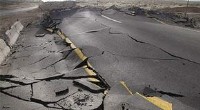
* Earthquakes: Plates sliding past each other (transform boundaries) cause earthquakes.
* Volcanoes: Magma rises from the mantle at divergent boundaries (where plates move apart) and at subduction zones (where one plate slides under another).
* Seafloor spreading: New ocean crust is created at divergent boundaries.
In short: Continental drift was a foundational idea that proposed the movement of continents, but it lacked a driving force. Plate tectonics provided the scientific explanation for *how* the movement happens, including the processes that shape the Earth's surface.
It's like the difference between saying "The car is moving" and saying "The car is moving because the engine is burning fuel and turning the wheels." Continental drift described the movement, while plate tectonics explained the engine behind it.