Here's why:
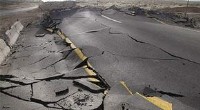
* Erosion and Weathering: The early Precambrian spans a vast time period (4.5 billion to 2.5 billion years ago). Over that time, rocks were subject to intense erosion, weathering, and tectonic activity, which destroyed or significantly altered their original structures.
* Metamorphism: Early rocks were often subjected to intense heat and pressure, causing them to undergo metamorphism. This process changes the original mineral composition and structure of the rock, making it difficult to decipher their original formation.
* Recycling: The Earth's tectonic plates constantly move and collide, causing rocks to be subducted back into the Earth's mantle, where they are melted and recycled. This process destroys the record of the early Earth.
* Limited Preservation: The conditions necessary for rock preservation (like being buried deep in the Earth or protected by sediment) were less common in the early Precambrian.
What we *do* have:
Despite these challenges, scientists have found some early Precambrian rocks, including:
* Greenstone Belts: These are volcanic and sedimentary rocks often found in the cores of ancient continents. They provide insights into the early Earth's environment and volcanic activity.
* Igneous Rocks: Intrusive rocks like granites and basalts, which solidify from magma or lava, can also be found from the early Precambrian.
* Metamorphic Rocks: Although highly altered, some metamorphic rocks retain clues about their original formation and the conditions of the early Earth.
While the scarcity of samples makes studying the early Precambrian challenging, scientists continue to use innovative methods, such as isotopic dating and analysis of rare minerals, to piece together the story of the early Earth.