Imagine the Earth's surface as a giant jigsaw puzzle, with pieces constantly moving and bumping into each other. That's the basic idea behind the theory of plate tectonics.
Here's the breakdown:
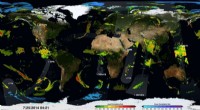
1. The Earth's Outer Layer: The Earth's outermost layer, the lithosphere, is not a solid, unbroken shell. Instead, it's divided into massive, rigid pieces called tectonic plates.
2. Movement: These plates are constantly moving, very slowly (a few centimeters per year), driven by forces deep within the Earth. This movement is caused by convection currents in the asthenosphere, a hot, semi-solid layer beneath the lithosphere.
3. Interactions at Plate Boundaries: The interactions between these plates at their boundaries are what cause most of the Earth's major geological phenomena, including:
* Volcanoes: Volcanoes often form at divergent boundaries, where plates are pulling apart, or at convergent boundaries, where plates are colliding.
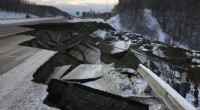
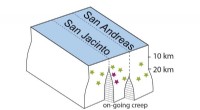
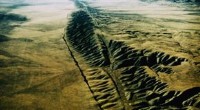
* Earthquakes: Earthquakes occur when plates grind past each other (transform boundaries), or when one plate slides beneath another (subduction zones).
* Mountain Ranges: Mountain ranges form when plates collide and buckle (convergent boundaries).
4. Supporting Evidence: The theory of plate tectonics is supported by a wealth of evidence, including:
* The fit of continents: The shapes of continents, particularly South America and Africa, suggest they were once joined.
* Fossil distribution: Similar fossils are found on different continents, implying they were once connected.
* Seafloor spreading: New oceanic crust is created at mid-ocean ridges and spreads away from them, pushing older crust towards the continents.
* Magnetic anomalies: The Earth's magnetic field has reversed many times throughout history, and these reversals are recorded in the rocks of the ocean floor.
In summary, the theory of plate tectonics explains the movement of the Earth's lithosphere, which in turn explains the formation of mountains, volcanoes, earthquakes, and other geological features.
This is a very simplified explanation, and there are many other details and complexities involved in the theory of plate tectonics.