1. Troposphere:
- This is the lowest layer, extending from the Earth's surface up to about 7-15 km.
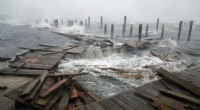
- Contains most of the atmosphere's mass and all of its weather.
- Temperature decreases with altitude.
2. Stratosphere:
- Extends from the tropopause (top of troposphere) to about 50 km.
- Contains the ozone layer, which absorbs harmful ultraviolet radiation from the sun.
- Temperature increases with altitude due to ozone absorption.
3. Mesosphere:
- Extends from the stratopause to about 85 km.
- Temperature decreases with altitude.
- This layer is where most meteors burn up.
4. Thermosphere:
- Extends from the mesopause to about 600 km.
- Temperature increases with altitude due to absorption of solar radiation.
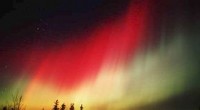
- Contains the ionosphere, which reflects radio waves.
5. Exosphere:
- The outermost layer, extending from the thermopause to about 10,000 km.
- Gradually fades into outer space.
- Temperature decreases with altitude.
Here's a helpful analogy to remember the order:
Think of a "T" for the Troposphere, the lowest layer. Then, from the "T" upwards, remember "Strato," "Meso," "Thermo," and "Exo."
It's important to note that the boundaries between these layers are not sharp and can vary depending on latitude and season.