1. The Principle of Superposition:
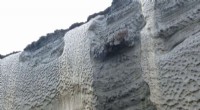
* The oldest layers of rock are found at the bottom, and the youngest layers are found on top. This is like building a stack of blocks—the first block you place down will be at the bottom.
* This principle is fundamental to understanding the order of events in Earth's history.
2. Fossils as Time Markers:
* Different types of fossils are found in different rock layers. These fossils can be used to identify the relative age of the layers.
* For example, trilobites are extinct marine creatures found in Paleozoic rocks, while dinosaurs are found in Mesozoic rocks. This helps us understand which layers formed before and after these creatures existed.
3. Rock Types and Formations:
* Different rock types are formed under different conditions, like volcanic eruptions, sedimentation, or metamorphism.
* The types of rocks and their formations tell us about the environment and events that occurred during that time period.
4. Unconformities:
* Unconformities are gaps in the rock record, representing missing time.
* These gaps can form when erosion removes layers or when there's a long period of non-deposition.
* Unconformities tell us that the geologic history is not always a continuous story.
5. Radiometric Dating:
* While stratigraphy provides relative dating, radiometric dating uses the decay of radioactive isotopes to determine the absolute age of rocks.
* This method is used to assign numerical ages to different rock layers, further refining our understanding of geologic time.
Putting it all Together:
By studying the layers of rock, the fossils they contain, the rock types, and the presence of unconformities, geologists can piece together a timeline of Earth's history. This timeline, known as the geologic timescale, is divided into eons, eras, periods, and epochs, each representing major events and changes in Earth's environment and life.
It's important to note that geologic time is vast, and understanding it requires patience, careful observation, and a good understanding of the principles of stratigraphy.