1. Earth's Plates:
* Earth's outer layer, called the lithosphere, is divided into massive, rigid plates called tectonic plates. These plates are constantly moving, though very slowly (a few centimeters per year).
* The movement is driven by convection currents in the Earth's mantle, which is the layer beneath the lithosphere.
2. Faults:
* Faults are fractures in the Earth's crust where rocks have moved past each other.
* They form at the boundaries of tectonic plates where the plates are either colliding, pulling apart, or sliding past each other.
3. How Earthquakes Happen:
* When tectonic plates move, the pressure builds up along the fault lines.
* This pressure eventually overcomes the strength of the rocks, causing them to break and slip suddenly.
* The sudden release of energy from this slip causes seismic waves to radiate outward from the point of rupture (the focus).
* These waves travel through the Earth and cause the ground to shake, resulting in an earthquake.
Types of Faults and Associated Earthquakes:
* Convergent Boundaries (Collision Zones): Plates collide, causing one plate to slide beneath the other (subduction). This often creates deep earthquakes, including some of the most powerful ones.
* Divergent Boundaries (Separation Zones): Plates move apart, creating new crust at mid-ocean ridges. These areas typically experience shallower earthquakes.
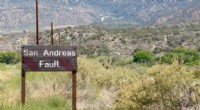
* Transform Boundaries (Sliding Zones): Plates slide horizontally past each other. These boundaries are often associated with shallow earthquakes, like those along the San Andreas Fault.
In Summary:
Earthquakes are a direct consequence of the movement of tectonic plates and the release of built-up pressure along fault lines. Understanding the relationship between plates, faults, and earthquakes is essential for predicting earthquake hazards and mitigating their impacts.