Erosional Landforms:
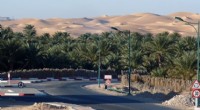
* Sand dunes: Wind-blown sand accumulates into mounds and ridges, often forming large fields in desert areas.
* Loess deposits: Fine silt and clay particles carried by wind settle and accumulate, forming fertile, but easily eroded soils.
Depositional Landforms:
* Alluvial fans: As rivers flow from mountains into flatter areas, their velocity decreases, causing sediment to be deposited in cone-shaped features.
* River terraces: As rivers erode down through their valleys, they leave behind terraces of deposited sediment.
* Delta: When a river flows into a standing body of water, it loses its energy and deposits sediment, creating a fan-shaped feature.
* Glacial moraines: As glaciers melt and retreat, they deposit sediment in various forms, including terminal moraines at the glacier's edge and lateral moraines along the sides.
* Outwash plains: Meltwater from glaciers carries sediment and deposits it in flat plains downstream.
* Playa lakes: Temporary lakes that form in arid regions, often filled with fine-grained sediment.
* Floodplains: Flat, fertile land along rivers that is periodically flooded, resulting in sediment deposition.
* Pediments: Gentle, sloping surfaces formed by the erosion and deposition of sediment at the foot of mountains.
Other Features:
* Soil: The accumulation of weathered rock, organic matter, and sediment forms the basis for plant life.
* Rock formations: Sedimentary rocks, like sandstone, limestone, and shale, are formed from the compaction and cementation of sediment layers.
It's important to note that the specific landforms formed depend on the unique combination of factors mentioned above. The interplay of erosion, deposition, climate, and other geological processes leads to a diverse range of features.