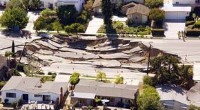
Rifting
* Process: Rifting occurs when the Earth's tectonic plates pull apart, causing the lithosphere (crust and upper mantle) to thin and break.
* Effect on shape: Rifting can:
* Create new ocean basins: As the crust thins, magma rises from the mantle, creating new crust and pushing the plates further apart. This eventually leads to the formation of a new ocean basin.
* Split continents: The continued rifting can eventually cause a continent to split into two or more pieces.
* Form rift valleys: As the lithosphere stretches, it can create depressions or valleys along the rift zone. These valleys can be filled with sediment and eventually become part of the new ocean basin.
Examples:
* East African Rift Valley: This rift system is still actively pulling apart, eventually expected to split the African continent.
* Red Sea: This body of water formed as the Arabian Peninsula drifted away from Africa.
Accretion
* Process: Accretion is the process of adding material to a continent, usually through the collision of tectonic plates.
* Effect on shape: Accretion can:
* Increase the size of continents: By adding new landmass, accretion can make continents larger.
* Create mountain ranges: When oceanic plates collide with continental plates, the denser oceanic plate subducts beneath the continental plate. This process can cause the continental plate to buckle and fold, forming mountain ranges.
* Change the coastline: Accretion can create new coastlines, islands, and peninsulas.
Examples:
* Himalayan Mountains: These mountains formed when the Indian subcontinent collided with the Eurasian plate.
* Western North America: The western edge of North America is a patchwork of accreted terranes, including volcanic arcs, ocean floor fragments, and microcontinents.
Summary:
Rifting and accretion are two powerful geological processes that have shaped the continents over millions of years. Rifting creates new ocean basins and splits continents, while accretion adds new landmass and creates mountain ranges. These processes are responsible for the diverse and constantly evolving shapes of the continents we see today.