Here are some examples of landforms:
* Mountains: Elevated areas with steep sides and a pointed or rounded summit.
* Valleys: Low areas between hills or mountains, often carved by rivers or glaciers.
* Plains: Flat, expansive areas of land.
* Plateaus: Elevated areas of relatively flat land.
* Canyons: Deep, narrow valleys often carved by rivers.
* Hills: Smaller, rounded elevations that are lower than mountains.
* Deserts: Dry, arid areas with little vegetation.
* Oceans: Vast bodies of salt water that cover most of the Earth's surface.
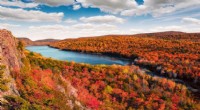
* Lakes: Bodies of water surrounded by land.
* Rivers: Flowing bodies of water that move from higher to lower elevations.
Landforms are created by a variety of processes, including:
* Tectonic activity: The movement of the Earth's crust can create mountains, valleys, and other landforms.
* Erosion: The wearing away of rock and soil by wind, water, and ice can create canyons, valleys, and other landforms.
* Deposition: The dropping of sediment by wind, water, and ice can create plains, deltas, and other landforms.
* Volcanic activity: Volcanoes can create mountains and other landforms.