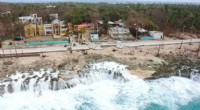
1. Physical Weathering:
* Temperature Changes: Rocks expand when heated and contract when cooled. If this happens repeatedly, especially in places with large temperature swings, it can cause the rock to crack and eventually break apart.
* Freezing and Thawing: Water expands when it freezes. If water seeps into cracks in rocks and freezes, it can exert enough pressure to widen the cracks and eventually break the rock.
* Abrasion: Rocks can be worn down by friction from wind, water, or ice carrying sand and other particles. This is especially common in areas with strong winds or fast-moving water.
* Plant Roots: Growing plant roots can exert pressure on rocks, causing them to crack and break.
* Animal Activity: Animals digging burrows or walking on rocks can also contribute to physical weathering.
2. Chemical Weathering:
* Dissolution: Some rocks, like limestone, are soluble in water and can be dissolved away over time.
* Oxidation: Iron in rocks can react with oxygen in the air or water to form rust. This rust weakens the rock and can cause it to crumble.
* Hydrolysis: Water can react with certain minerals in rocks to create new minerals that are more easily broken down.
* Biological Weathering: Living organisms, like lichens and bacteria, can produce acids that break down rocks.
How weathered rock becomes soil:
* As rocks break down into smaller and smaller pieces, they mix with organic matter (decomposed plant and animal material).
* This mixture, along with water and air, forms the basis of soil.
* The type of soil that develops depends on the parent rock, the climate, the topography, and the amount of organic matter present.
In summary, soil formation is a slow and continuous process that involves both the physical and chemical breakdown of rocks and the addition of organic matter.