1. Buoyancy and Pressure:
* Magma is less dense than the surrounding solid rock. This difference in density creates a buoyant force, pushing the magma upward.
* As magma rises, it encounters decreasing pressure, causing it to expand and further increase its buoyancy.
2. Fractures and Faults:
* The upward pressure of magma can create fractures and faults in the overlying rock.
* These pathways act as conduits for the magma to rise.
3. Magma Chambers:
* As magma rises, it may collect in underground chambers, called magma chambers.
* These chambers can act as reservoirs for the magma, allowing it to accumulate and further increase pressure.
4. Eruption Types:
* Explosive eruptions: Occur when magma is highly viscous (thick) and contains dissolved gases. The pressure from the expanding gases can cause a violent eruption, spewing ash, gas, and pyroclastic flows.
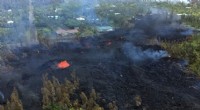
* Effusive eruptions: Occur when magma is less viscous and contains fewer dissolved gases. This type of eruption produces lava flows that spread slowly over the surface.
5. Volcanic Features:
* Volcanic eruptions create various features, including:
* Volcanoes: Cone-shaped mountains built up by layers of lava flows and volcanic debris.
* Lava flows: Streams of molten rock that flow from a vent or crater.
* Calderas: Large, bowl-shaped depressions formed by the collapse of a volcano after a major eruption.
* Ash clouds: Plumes of volcanic ash and gas that can reach high into the atmosphere.
In Summary:
Magma rises to the surface through a combination of buoyancy, pressure, and the creation of fractures and faults in the overlying rock. The type of eruption depends on the viscosity and gas content of the magma. Volcanic eruptions create a variety of landforms, including volcanoes, lava flows, and calderas.