1. Seismic Waves:
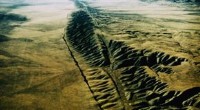
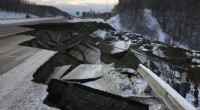
* Earthquakes: Earthquakes generate seismic waves that travel through the Earth's interior. Scientists use seismographs to record these waves and their travel times.
* Wave Behavior: Different types of seismic waves (P-waves and S-waves) travel at different speeds and are affected differently by different materials. For example, S-waves cannot travel through liquids.
* Shadow Zones: There are areas on the Earth where certain types of seismic waves are not detected, called "shadow zones." This is because the waves are refracted (bent) or reflected by the different layers of the Earth.
* Analysis of Wave Paths: By analyzing the speed, direction, and timing of seismic waves, scientists can map out the different layers of the Earth and their compositions.
2. Gravity Measurements:
* Variations in Gravity: The force of gravity varies slightly across the Earth's surface. These variations are influenced by the density of the underlying rock. Areas with denser rock have a stronger gravitational pull.
* Gravity Anomalies: Areas with large variations in gravity are called "gravity anomalies." These anomalies can indicate the presence of different geological formations or structures within the Earth.
3. Magnetic Field:
* Earth's Magnetic Field: The Earth has a magnetic field generated by the movement of molten iron in the outer core. This field provides valuable information about the composition and movement of the core.
4. Meteorites:
* Composition: Studying the composition of meteorites, which are thought to be remnants of the early solar system, provides clues about the composition of the Earth's core and mantle.
5. Deep Drilling:
* Direct Samples: Although limited in depth, drilling projects have provided direct samples of Earth's upper layers, including the crust and upper mantle.
6. Lab Experiments:
* High-Pressure Experiments: Scientists conduct experiments in laboratories to simulate the extreme pressures and temperatures found deep within the Earth. This allows them to study how materials behave under these conditions.
7. Computer Modeling:
* Numerical Simulations: Computer models can be used to simulate the behavior of Earth's interior based on data from seismic waves, gravity measurements, and laboratory experiments.
By combining all these methods, scientists have been able to construct a detailed model of Earth's layered structure, including its crust, mantle, outer core, and inner core.