The Earth's landforms are a result of a complex interplay of geological processes over millions of years. Here are some key theories and processes involved in land formation:
1. Plate Tectonics:
* The foundation: This is the cornerstone of modern geology, explaining the movement of the Earth's lithosphere (crust and upper mantle) in large plates. These plates interact at their boundaries, resulting in:
* Convergent Boundaries: Where plates collide, causing:
* Mountain ranges: Like the Himalayas, formed by the collision of continental plates.
* Volcanoes: Formed when one plate subducts (slides under) another, releasing magma.
* Island arcs: Chains of volcanic islands like the Japanese Archipelago.
* Divergent Boundaries: Where plates move apart, leading to:
* Mid-ocean ridges: Underwater mountain ranges where new oceanic crust is formed.
* Rift valleys: Landmasses splitting apart, like the East African Rift Valley.
* Transform Boundaries: Where plates slide past each other horizontally, causing:
* Earthquakes: Like the San Andreas Fault in California.
2. Volcanism:
* Volcanoes as land builders: Volcanic eruptions can build up landmasses over time, creating islands, plateaus, and even entire mountain ranges.
* Types of volcanic landforms:
* Shield volcanoes: Broad, gently sloping volcanoes like Mauna Loa in Hawaii.
* Stratovolcanoes: Tall, cone-shaped volcanoes like Mount Fuji in Japan.
* Cinder cones: Small, steep-sided volcanoes formed by explosive eruptions.
3. Erosion:
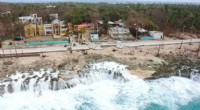
* The sculpturing force: Erosion is the process of wearing down and transporting land by agents like wind, water, and ice.
* Types of erosion:
* Water erosion: Rivers carve valleys, canyons, and deltas.
* Wind erosion: Creates deserts, sand dunes, and loess deposits.
* Glacial erosion: Forms U-shaped valleys, cirques, and moraines.
4. Weathering:
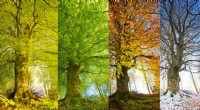
* Breaking down rocks: Weathering is the process of breaking down rocks into smaller pieces by physical or chemical means.
* Types of weathering:
* Physical weathering: Frost wedging, thermal expansion, and abrasion.
* Chemical weathering: Dissolution, oxidation, and hydrolysis.
5. Sedimentation:
* Building landforms: Sediments eroded from existing landforms are transported and deposited, forming new landforms like beaches, deltas, and alluvial fans.
* Processes involved: Deposition, compaction, and cementation.
6. Isostasy:
* Floating continents: Isostasy explains how the Earth's crust floats on the denser mantle, resulting in adjustments in land elevation based on density and thickness.
* Consequences: Mountains rise higher due to their low density, while valleys and ocean basins are lower due to their denser composition.
7. Other Processes:
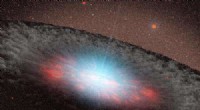
* Impact craters: Large meteor impacts can create depressions and even uplift land, influencing local topography.
* Tectonic uplift: Slow, continuous vertical movements of the Earth's crust can elevate landmasses over time.
Note: These theories and processes are often interconnected, influencing each other in a complex interplay that shapes the Earth's diverse landscapes. Understanding these forces helps us appreciate the intricate geological history of our planet.