Here's a breakdown of the two types:
1. Physical Weathering:
* Mechanism: This type involves the breakdown of rocks into smaller pieces without changing their chemical composition. Think of it as "breaking" rather than "changing."
* Examples:
* Frost wedging: Water seeps into cracks, freezes, expands, and puts pressure on the rock, eventually causing it to break apart.
* Thermal expansion and contraction: Rocks expand when heated and contract when cooled. This repeated process can lead to cracks and eventually fragmentation.
* Abrasion: Rocks rubbing against each other (like in a river bed) or against other particles (like sand blown by wind) can cause wear and tear, breaking them down.
* Root wedging: Growing tree roots can exert pressure on surrounding rocks, causing them to crack.
* Salt wedging: Salt crystals form in cracks, grow, and exert pressure, leading to rock disintegration.
2. Chemical Weathering:
* Mechanism: This type involves changing the chemical composition of rocks, leading to their breakdown. Think of it as "transforming" the rock.
* Examples:
* Hydrolysis: Water reacts with minerals in rocks, breaking them down into different compounds.
* Oxidation: Oxygen in the air or water reacts with minerals, particularly iron, forming rust (iron oxide), which weakens the rock.
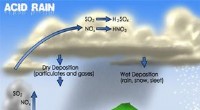
* Carbonation: Carbon dioxide dissolved in rainwater forms a weak acid that can dissolve rocks, especially limestone.
* Biological weathering: Living organisms (like bacteria, fungi, or lichens) produce acids or break down rock for nutrients, contributing to their disintegration.
Important Points:
* Both physical and chemical weathering often work together: Physical weathering can create more surface area for chemical weathering to act upon.
* Weathering is affected by:
* Climate: Temperature, rainfall, and humidity play a significant role.
* Rock type: Some rocks are more resistant to weathering than others.
* Topography: Steep slopes promote faster erosion, while flat areas experience more weathering.
* Presence of vegetation: Roots and organic acids can accelerate weathering.
The result of weathering:
* Formation of soil: The breakdown of rocks provides the basic ingredients for soil development.
* Landforms: Weathering is responsible for sculpting landscapes, creating valleys, canyons, and other geological features.
* Sedimentation: The weathered rock fragments become sediments, which are transported by wind, water, or ice and eventually form new sedimentary rocks.
Understanding weathering is essential for understanding how landscapes evolve, how soils form, and how rocks are recycled within the Earth's system.