Here's why:
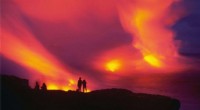
* Extrusive Igneous Rocks: These rocks form when magma (molten rock) erupts onto the Earth's surface as lava and then cools and solidifies.
* Volcanic Rocks: This is a more specific term for extrusive igneous rocks, emphasizing their origin from volcanic activity.
The rapid cooling of lava prevents large crystals from forming, resulting in rocks with:
* Fine-grained textures: Many small crystals are visible.
* Glassy textures: Some volcanic rocks cool so quickly that crystals don't even have time to form, resulting in a glass-like texture.
Examples of volcanic rocks include:
* Basalt: A dark-colored, fine-grained rock commonly found in oceanic crust.
* Rhyolite: A light-colored, fine-grained rock often associated with explosive volcanic eruptions.
* Obsidian: A glassy, black volcanic rock that cools very quickly.