1. Historical and Paleoseismic Data:
* Historical records: Studying historical records, including accounts from ancient civilizations, chronicles, and newspaper articles, helps identify past earthquake locations and magnitudes.
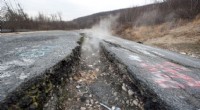
* Paleoseismology: Examining geological formations and landforms, such as fault scarps, offset layers, and liquefaction features, reveals evidence of past earthquakes. This helps determine the frequency and magnitude of earthquakes in a particular region.
2. Geodetic Measurements and Monitoring:
* Global Positioning System (GPS): GPS receivers are installed throughout a region to measure ground deformation and movement. These data reveal subtle shifts in the Earth's surface related to tectonic plate movement, which can predict potential earthquake locations.
* InSAR (Interferometric Synthetic Aperture Radar): This satellite-based technology measures ground deformation by analyzing radar signals, providing detailed maps of changes in the Earth's surface.
3. Seismological Monitoring:
* Seismometers: These instruments detect and record ground vibrations caused by earthquakes. Data from numerous seismometers is used to determine earthquake location, magnitude, and depth.
* Seismic tomography: Analyzing seismic waves' travel times and patterns helps create 3D images of the Earth's interior. This helps identify fault zones and regions with high stress concentration.
4. Geological Mapping and Fault Analysis:
* Geological mapping: Identifying and characterizing faults, especially active ones, helps pinpoint areas susceptible to earthquakes.
* Fault slip rate: Determining how fast a fault is moving provides insight into the potential earthquake frequency and magnitude.
5. Earthquake Modeling and Forecasting:
* Numerical models: Computer simulations are used to model the Earth's interior, fault behavior, and earthquake propagation, allowing for better predictions of potential earthquake scenarios.
* Probabilistic seismic hazard analysis: Combining data from different sources, this method calculates the likelihood of experiencing earthquakes of specific magnitudes in a particular region over a certain period.
6. Other Factors:
* Ground conditions: The type of soil and rock in a region can affect the severity of earthquake shaking.
* Human activities: Activities like reservoir impoundment, wastewater injection, and oil/gas extraction can sometimes trigger earthquakes.
Earthquake risk assessment is an ongoing process that continuously evolves as new data and methods become available. It's crucial to combine all these methods to obtain a comprehensive understanding of earthquake risk in a given area.