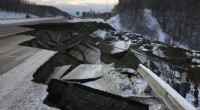
* The Principle of Cross-Cutting Relationships: A fault (a break in the Earth's crust) must be younger than the rocks it cuts through. If a fault cuts through a layer of sedimentary rock, we know the sedimentary rock was there first and the fault formed later.
* Determining Sequence of Events: By observing the relationship between faults and rock layers, geologists can reconstruct the order in which events occurred in a region. For example, if a fault cuts through a layer of rock, and that layer is subsequently folded, we know the faulting event occurred first, followed by the folding.
Important Note: While faults help determine the relative ages of rock groups, they don't provide absolute ages (like numerical dates). For absolute dating, methods like radiometric dating are employed.