1. Convection Currents in the Mantle:
* The Earth's mantle, a layer of hot, semi-solid rock, undergoes convection.
* Hotter, less dense material rises, while cooler, denser material sinks.
* This creates a circular flow of material within the mantle.
2. Drag on the Plates:
* The convection currents in the mantle drag the tectonic plates along with them.
* The plates are like rafts floating on the moving mantle.
3. Ridge Push and Slab Pull:
* Ridge Push: At mid-ocean ridges, where new crust is formed, the rising magma pushes the plates apart.
* Slab Pull: At subduction zones, where one plate slides beneath another, the dense, sinking plate pulls the rest of the plate along with it.
4. Plate Boundaries:
* The interactions between these moving plates at their boundaries are responsible for many of the Earth's geological features, such as:
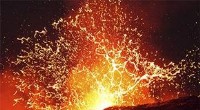
* Volcanoes: Occur where plates converge or diverge.
* Earthquakes: Caused by the release of built-up stress at plate boundaries.
* Mountain Ranges: Formed when plates collide.
In summary, the Earth's crust is moved by a combination of forces driven by the convection currents within the mantle, along with the forces of ridge push and slab pull.