1. The Earth's Structure:
* The Earth's outermost layer, the lithosphere, is broken into massive plates called tectonic plates.
* These plates rest on a semi-molten layer called the asthenosphere.
2. Plate Movement:
* These tectonic plates are constantly moving, driven by convection currents within the Earth's mantle.
* The plates can move towards each other (convergent), away from each other (divergent), or slide past each other (transform).
3. Stress and Strain:
* As plates move, they interact with each other.
* This interaction creates tremendous stress and strain along the plate boundaries.
* The rock along these boundaries is constantly being deformed.
4. Fault Lines and Earthquakes:
* When the accumulated stress exceeds the strength of the rocks, the rocks suddenly break along a fault line.
* This sudden release of energy causes the ground to shake, resulting in an earthquake.
Types of Plate Boundaries and Earthquakes:
* Convergent Boundaries:
* Plates collide, causing one plate to subduct beneath the other.
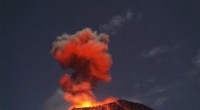
* This creates deep earthquakes and volcanic activity.
* Examples: The Andes Mountains, the Japan Trench.
* Divergent Boundaries:
* Plates move apart, creating new crust.
* This generally produces shallower earthquakes and volcanic activity.
* Examples: The Mid-Atlantic Ridge, the East African Rift Valley.
* Transform Boundaries:
* Plates slide past each other horizontally.
* This can cause shallow earthquakes.
* Examples: The San Andreas Fault in California.
In Summary:
Plate tectonics causes earthquakes because of the constant movement and interaction of the Earth's tectonic plates. This movement generates stress and strain along plate boundaries, which eventually leads to a sudden release of energy in the form of an earthquake.