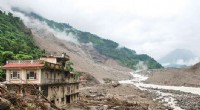
* Erosion is the process of wearing away and transporting material. This can be done by wind, water, ice, or even gravity.
* Deposition is the process of dropping off that material. This occurs when the transporting force (wind, water, etc.) loses energy and can no longer carry the sediment.
Here's where the "opposite" idea falls apart:
* Both erosion and deposition are part of a continuous cycle. Sediment is constantly being eroded from one place and deposited in another. They work together to shape the Earth's surface.
* Erosion doesn't always lead to deposition. Sometimes, eroded material is carried away and never deposited, especially in the case of wind erosion.
* Deposition doesn't always follow erosion. Deposition can also happen from materials that were never eroded, such as volcanic ash or glacial meltwater carrying rocks.
A better way to think of the relationship between erosion and deposition:
* They are complementary processes that work together to sculpt the Earth's landscape.
* One is the removal of material, while the other is the addition of material.
In conclusion: It's more accurate to say that erosion and deposition are two sides of the same coin, not exact opposites. They are both essential components of the Earth's dynamic surface.