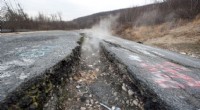
* Water and Weathering: Rainfall plays a crucial role in weathering rock. Rainwater can:
* Dissolve Minerals: Rainwater is slightly acidic, and it can dissolve minerals in rocks, weakening them.
* Freeze-Thaw Cycles: Water infiltrating cracks in rocks freezes and expands, putting pressure on the rock. Repeated freeze-thaw cycles can break down the rock structure.
* Erosion: Rainwater can erode soil and sediment, exposing rock to further weathering.
* Vegetation and Stability: Areas with abundant rainfall typically have more dense vegetation. While vegetation can help stabilize slopes, it can also:
* Root Growth: Tree roots can grow into cracks in rocks, putting stress on them.
* Weight: Dense vegetation adds significant weight to slopes, increasing the risk of instability.
* Soil Saturation: Heavy rainfall saturates the soil, making it heavier and more prone to landslides. This can destabilize slopes and lead to rock falls.
* Hydrological Processes: In wet climates, streams and rivers can carve channels and erode slopes, increasing the risk of rock falls.
In contrast, dry climates have:
* Less Weathering: The lack of frequent rainfall reduces the rates of weathering, leaving rocks more stable.
* Limited Vegetation: Sparse vegetation has less impact on rock stability.
* Dry Soil: Dry soil is less susceptible to landslides.
Therefore, mountainous areas with abundant rainfall experience a more dynamic and rapid weathering process, leading to more frequent rock falls.