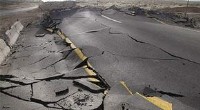
1. Plate Tectonics:
- Earth's outer layer (lithosphere) is broken into large pieces called tectonic plates.
- These plates are constantly moving, driven by convection currents in the Earth's mantle.
2. Collision Zones:
- When two tectonic plates collide, the denser plate is forced beneath the lighter plate (subduction).
- However, sometimes, two continental plates with similar densities collide. This is known as a continental-continental collision.
3. Folding and Uplift:
- The immense pressure of the colliding plates causes the rocks at the plate boundary to buckle and fold.
- This folding creates the characteristic uplifts and depressions that we see in folded mountains.
4. Mountain Formation:
- The process of folding and uplift continues for millions of years, gradually building up mountains over time.
Example:
- The Himalayas are a classic example of folded mountains formed by the collision of the Indian and Eurasian plates.
In summary: Folded mountains are formed when two tectonic plates collide, resulting in immense pressure that causes the rock layers to buckle, fold, and uplift, ultimately creating the majestic mountain ranges we see today.