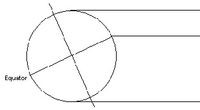
1. Distribution of Glacial Deposits:
* Wide Distribution: Glacial till, a mixture of unsorted rock fragments deposited by glaciers, is found in areas that are currently far apart, such as South America, Africa, India, Antarctica, and Australia.
* Similar Rock Types: The till in these geographically separated areas often contains similar rock types, suggesting that these landmasses were once connected.
2. Matching Glacial Striations:
* Parallel Directions: Glacial striations, scratches on bedrock caused by the movement of glaciers, exhibit parallel directions in geographically separated areas.
* Matching Patterns: The striations found on the continents now separated by oceans often show matching patterns, indicating that the continents were once joined.
3. Ancient Glacial Centers:
* Reconstructing Positions: The distribution of glacial deposits allows scientists to reconstruct the past locations of glacial centers.
* Evidence for Connection: When continents are reassembled into their hypothetical positions, these glacial centers often align, suggesting that they were once a single, interconnected landmass.
Example:
* The presence of glacial till in South America and Africa is a strong indicator that these two continents were once joined, allowing glaciers to flow across them.
* When these continents are brought together, the glacial centers of these deposits align, further supporting the idea of continental drift.
Therefore, glacial deposits provide strong evidence for continental drift by:
* Demonstrating the existence of ancient glaciers in areas that are now separated by oceans.
* Showing the matching patterns of glacial striations across continents.
* Reconstructing past positions of glacial centers, which align when continents are reconnected.
This evidence, along with other geological and paleontological data, forms a strong basis for the theory of continental drift.