1. Sedimentary Features:
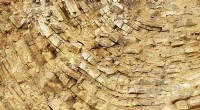
* Graded Bedding: The most characteristic feature of turbidity currents is graded bedding, where coarse sediments (like gravel or sand) are at the base and finer sediments (like silt or clay) are at the top. This is because the heavier sediments settle first as the current slows down.
* Bouma Sequence: This is a specific sequence of five layers (A-E) found in some turbidite deposits, each with distinct textures and structures. The "A" layer is usually a massive, coarse-grained layer with a sharp base, followed by the "B" layer, which is parallel-laminated, and so on.
* Sole Marks: These are structures formed on the bottom of the turbidite layer by the current eroding the underlying sediment. Examples include flute casts (teardrop-shaped depressions), groove casts (linear grooves), and tool marks (scratches or gouges).
* Convolute Bedding: Irregular and contorted layers within the turbidite deposit, often formed by the sediment liquefying or slumping during deposition.
* Turbidite Structures: These include features like load casts (bulbous structures formed when denser sediment sinks into less dense sediment), flame structures (upward projections of finer sediment into denser sediment), and scour marks (erosional channels formed by the current).
2. Structural Characteristics:
* Thickness and Distribution: Turbidite deposits can be very thick, ranging from meters to tens of meters, and can extend laterally for great distances.
* Channel Morphology: In some cases, turbidite deposits can be found within channels or canyons carved into the underlying bedrock, indicating that the current was confined to a specific pathway.
3. Contextual Evidence:
* Geological Setting: Turbidite deposits are typically found in sedimentary basins, especially those with steep slopes and active tectonics.
* Association with other Sediments: Turbidites are often associated with other deep-water deposits, such as pelagic sediments or hemipelagic sediments.
* Paleontological Evidence: The presence of fossils characteristic of deep-water environments (e.g., benthic foraminifera) can help confirm a turbidite origin.
Important Note:
* Not all turbidite deposits will exhibit all of these features. The specific characteristics observed will depend on the nature of the current, the depositional environment, and subsequent modification.
* It is crucial to have a good understanding of the geological context and to consider all available evidence when identifying a turbidite deposit.
Remember: Identifying ancient turbidite deposits requires careful observation and analysis. Consulting with a qualified geologist is recommended for a definitive diagnosis.