Here's why:
* Earth's Magnetic Field: Earth has a magnetic field, generated by the movement of molten iron in its core. This field acts like a giant bar magnet, with a north and south magnetic pole.
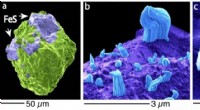
* Iron Minerals: Certain iron minerals, like magnetite, are magnetic. When these minerals solidify in cooling lava or sediment, they align themselves with Earth's magnetic field at the time.
* Magnetic Reversals: Over geologic time, the Earth's magnetic field has flipped, with the north and south poles switching places. This happens randomly and irregularly, with reversals occurring every few hundred thousand to a few million years.
* Recording Reversals: Each time the magnetic field reverses, the newly forming iron minerals record this change in their orientation. This creates a record of past magnetic reversals in the rock record.
By studying the alignment of iron minerals in rocks of different ages, geologists can reconstruct the history of Earth's magnetic field, including the timing and frequency of magnetic reversals. This information helps us understand the dynamics of Earth's interior and its influence on the planet's surface.