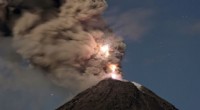
1. Crystallization from a melt: This is the most common way minerals form. When molten rock (magma or lava) cools, the atoms within it start to arrange themselves into a regular, repeating pattern, forming crystals. This process is responsible for the formation of many common minerals, such as quartz, feldspar, and olivine.
2. Precipitation from a solution: Minerals can also form when dissolved substances in a solution become supersaturated and precipitate out. This can happen when the solution cools, evaporates, or when the chemical conditions change. This process is responsible for the formation of many minerals found in caves, salt flats, and sedimentary rocks, such as halite (rock salt), calcite, and gypsum.
3. Solid-state transformation: Minerals can also form through the transformation of existing minerals without melting. This process often happens under high pressure and temperature, and can change the chemical composition or crystal structure of the mineral. For example, the mineral graphite can transform into diamond under extreme pressure.
4. Biomineralization: Some minerals are formed by living organisms. These organisms can extract dissolved substances from their environment and use them to build their shells, bones, or other structures. Examples include the formation of shells by mollusks (made of calcium carbonate), bones by vertebrates (also made of calcium phosphate), and even the iron oxide in red algae.
It is important to note that these processes often overlap, and some minerals may form through a combination of these methods.