Here's a breakdown of the key ideas:
* Earth's Outer Layer is Divided into Plates: The lithosphere is broken into several large plates (and many smaller ones) that fit together like a puzzle.
* Plates Move: These plates are not stationary; they move slowly over time, driven by convection currents in the asthenosphere.
* Plate Interactions: The movement of these plates causes a variety of geological phenomena, including:
* Earthquakes: Occur when plates slide past each other, collide, or pull apart.
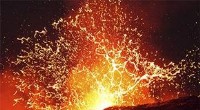
* Volcanoes: Form when plates collide and one plate slides under the other (subduction), or when magma rises to the surface through cracks in the crust.
* Mountain Ranges: Created when plates collide and push against each other.
* Ocean Trenches: Deep depressions in the ocean floor formed where one plate slides under another.
* Mid-Ocean Ridges: Underwater mountain ranges where new ocean crust is created as plates move apart.
Implications:
* Understanding Earth's History: Plate tectonics explains the formation of continents, oceans, and mountains over millions of years.
* Predicting Geological Hazards: By understanding plate movements, we can better predict the locations and timing of earthquakes and volcanic eruptions.
* Exploration of Earth's Resources: Plate tectonics provides clues about the distribution of mineral deposits and fossil fuels.
In essence, the theory of plate tectonics provides a unifying framework for understanding many of the geological processes that shape our planet.